
Clean energy and its role in developing the green industry
When we talk about sustainability, few factors influence company practices as much as the energy used in their processes. This impact is even greater in industries, which account for 35% of Brazil’s total electricity consumption. In this context, it’s clear that choosing a clean energy source must go beyond the most attractive economic option and become a commitment to the sustainable and fair future we want for our country.
That’s why today’s article goes into detail and explains the difference between renewable energy and clean energy in practice. Keep reading to better understand the topic and assess which option is best for your company!
Difference between clean and renewable energy
First, it’s important to distinguish clean energy from renewable energy. Many people think they’re synonyms, but they are different concepts. As the name suggests, renewable energies come from non-exhaustible sources in nature—such as hydropower, for example.
Compared to fossil fuels such as natural gas and oil, renewable sources don’t emit the same amount of toxic gases into the atmosphere. These gases, like carbon monoxide, have serious consequences for the environment—especially global warming.
However, that doesn’t mean renewable energies have no negative environmental impacts. That’s because generating this type of energy can harm local ecosystems where the energy source is located.
For example, hydropower, although widely used in industry, raises important environmental and social issues. These stem from changes in river course and flow to build hydroelectric plants, which also impact local ecosystems. In addition, fishing activities of riverside communities that depend on rivers economically and for subsistence are disrupted.
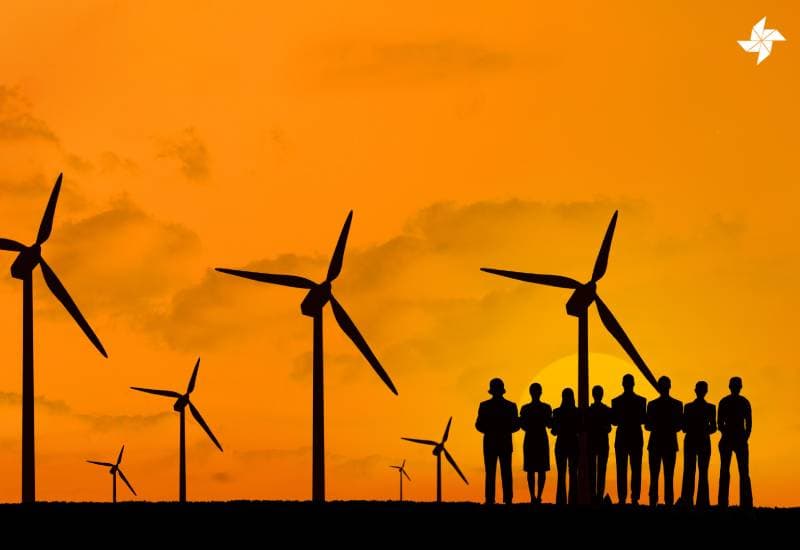
On the other hand, so-called clean energies are named that way because they have virtually zero environmental impact, from use to extraction and processing. The most common examples in the market are wind power and solar energy.
Therefore, to significantly mitigate environmental and social impacts related to commercial and industrial activities, clean energy becomes not only viable, but sustainable—environmentally and economically over the long term.
Clean energy was a highlight at COP 27
To give you an idea of the importance of clean energy in the global environmental context, the topic was discussed at the 2022 United Nations Climate Change Conference, held in Egypt from November 6 to 18, 2022. The conference brings together world leaders, including heads of state, stakeholders, and business leaders, to discuss climate-related topics. In its 27th edition, it defended clean energy as a way to reduce global warming by up to 0.5°C.
This number may sound small, but the forecast is that 2.4 million lives per year could be saved by 2050 through improved air quality and fewer extreme weather events, such as heat waves, wildfires, and storms.
In addition, an important point in clean energy progress is the increasingly accessible cost of solar energy, which can support the transition from fossil fuels toward a zero-emissions scenario. This is also one of Brazil’s biggest strengths, given its unique potential for clean energy generation.
Brazil’s potential in clean energy generation
According to the Ministry of the Environment, one of Brazil’s goals at COP was to showcase the country’s green energy potential. The idea was to attract investments and climate financing for the development of a green economy, with a goal of net-zero emissions by mid-century.
In an interview, the Minister of the Environment, Joaquim Leite, also highlighted the potential for wind energy production through offshore wind farms, particularly along Brazil’s northeastern coast. It’s estimated that the potential is 700 GW—equivalent to 50 Itaipu plants, the largest hydroelectric plant in Brazil and one of the largest in the world. The financial potential could reach R$ 1 trillion.
This is because, due to strong winds and low storm occurrence, installing and maintaining equipment is cheaper compared to other regions in the Americas and Europe. This can attract more investments at a time when the world needs this solution as quickly as possible.
In this context, Ideal Work is proud to announce that it is part of the change building a better future not only for Brazil, but for the planet. Our commitment to sustainability goes beyond ESG; we take a practical view of our impact and our potential in Brazilians’ day-to-day lives.
That’s why one of our goals is to have Ideal Work’s five manufacturing units powered by solar panels by the end of 2023. If this is also a goal for your company, we invite you to read our Sustainability Report, a public document focused on actions and initiatives across all levels of Ideal Work related to sustainability.
Today, this is our invitation not only to other industries, but to the entire Brazilian market. Ideal Work understands sustainability is built through daily choices and that, together, we can help build a tomorrow that is fairer and more equal for everyone.